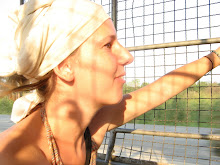
“It would be nice if I can go to the waste dump today” Manou said to me this morning sharing our breakfast and morning coffee. Manou had been there before to play with the children in the Sky Blue school which is basically located on the waste dump, a place where some 200 Burmese refugees try to survive. When she calls to Hannah, another Farang, to arrange a new meeting the answer is: “After the bomb explosion on 24th of February foreigners no longer go there”.
Mae Sot is a special place, a crossroads of cultures. Never before I faced so much suffering but also never before I felt such courage, endurance and friendship. I live here now since one month after my five day visit with the delegation in January.
“Everyday is an adventure” is what Black Town, a Burmese friend told me. I can say the same but our adventures are very different. Black Town is here illegal; he works for the Committee for Internally Displaced Karen People (CIDKP), every time he leaves his room he is afraid to be arrested, possibly leading to an unhappy ending. For me the adventures are the stories I hear everyday and even more the meetings I have. These adventures open my eyes to the world. Mae Sot is maybe the best school I ever attended. I was never more aware of the luck accompanying me already 28 years. I never felt my freedom so deep inside. Often I am frustrated because I want big changes. However everyday I see the benefit of small things like talking to youngsters or editing an English document and smile again. I learn so much!
Yesterday I drove with my bicycle towards a big red evening sun, I pass a clothe shop where the lady smiles at me. The aerobic lesson is about to start but I tell her I don’t join tonight “I have a meeting”. I wanted to meet with the sun so it was not a real lie I told myself. Two minutes later I stop at Joe’s little house. Joe works everyday with his old sewing machine he brought to live again five years ago. Saying hello and smiling to Joe became my favorite part of my trip to the other side of town where I work. One day I brought him the pants I ruined with the chain of a bike in Burma. We became friends. Yesterday he said something about dinner. “Yes, let’s go” I said, “I have no plans”. His friend Em passes and recommends us to take the motorbike and drive up the mountain to the lake. A beautiful evening with the silence of nature, the red sky and the burning fields. I was at the Lake Manou and I tried to find on Sunday but with the help of the nice people from what we call ‘the nice-people-internet-place’ we ended up at a swimming pool. “Yes, with nature” they had said. Joe had repaired my pants very nice and asked 0,20 euro, the rent of his house is 16 euro a month. Most of the days he does not earn the minimum wage which is about 3 euro in Thailand.
The smiles are plenty here and each one has its own story. The woman selling every evening some fruits or nuts which she carries on her head, the man from a very small bike repair shop/eating place who I asked for help already five times. As a Farang you receive many smiles and I often wonder what would happen if people in Europe would smile to all those who look a bit different.
I feel at home in Mae Sot.
Wednesday, February 27, 2008

Wednesday, January 30, 2008
Excuse me, where can I find the number of The International Community?
My friend, a refugee from
Former UN Secretary-General Kofi Annan called on governments to take the responsibility to protect when it comes to people suffering from avoidable catastrophe -mass murder and rape, ethnic cleansing by forcible expulsion and terror, and deliberate starvation and exposure to disease. He mentions that there is a growing acceptance that while sovereign governments have the primary responsibility to protect their own citizens from such catastrophes, when they are unable or unwilling to do so responsibility should be taken up by the wider international community. This would involve prevention, response to violence, if necessary, and rebuilding societies.
I remember my professor recalling the quote of Henry Kissinger "Who do I call if I want to call
In
No Belgium has done more since the crisis began (talking about August -September 2007). It has taken steps at the European, international (UN) and regional levels. Foreign Minister Karel De Gucht was very clear about this: "Right from the outset,
Internationally
The EU did respond with stronger sanctions against
The
The United Nations Security Council (UNSC) did not answer the calls before 2006! Lately it tried with a draft resolution calling on
More recently on January 17th 2008 the UNSC has come up with a statement that Burma's military rulers had done too little to meet demands (non-binding and toned down by China) it laid out in October for release of political prisoners and a genuine dialogue with the opposition following a crackdown on protesters.
Unfortunately all these 'wordily' efforts have been pretty much in vain! And Mark Farmaner of Burma Campaign
The Generals do not like to travel much anyway, imports via third countries are not banned by the EU, and the weapons from
The role of
Trade between
On the question of the role of
In terms of bloody economical arms deals not only
Several analysts also point to the strategic importance of
Within the world's political domain, the West holds positions of power as well as key economic positions. In practice, the combination of these two factors periodically lead to the former being used to maintain the latter. We should not neglect this when looking at it's - at first sight at least - undoubtedly noble aim: to help bring peace and prosperity to the world.
More diplomacy, more global public actions, real measures and more support are needed!
The people of
Sunday, January 27, 2008
In Thailand I found Burma
The first thing I found in Thailand was a book about Aung San Suu Kyi. Reading in the nights on my way to Bangkok I was still unaware that I would meet some of the people I read about.
Last week I joined a delegation led by Burma Campaign UK on a field trip to the border area in northern Thailand. What I saw, heard and and learned is impossible to forget. When we approached a new camp of internally displaced people on the Burmese side of the Salaween river on 15th of January I felt I was going somewhere, a one way trip bound to mark my soul.
Border tourism
Here in Chiang Mai too many tourist agencies also offer trips. "Long Neck & Elephant Riding" you read on their pamphlets. Or you get to see "Long Ears" but the Long Necks are especially popular. Far away from here you might think it is another exotic animal to ride. Unfortunately you did not guess too wrong. I haven't seen them myself but according to what the tour-sellers tell me it is a visit to a Karen tribe village where you pay an entrance fee of 5.50 euro. The fee is of course for the benefit of the village. Yes, sorry we are not talking about animals but about hill tribes that still live in the past (poor living conditions) and managed to preserve their cultures! The tourist agencies and guesthouses aim to please tourists who are interested in experiencing real traditional cultures. Tourists though can not be that ignorant and think they will ride a "Long Neck". Postcards sold or pictures trying to attract possible trip-buyers show the Karen women with their necks chained and as such prolonged to 20 or 30 cm. A rarity!
Lonely Planet offers a bit more information and gives answers most the tour-vendors could not. "If you pay an entrance fee, does it mean the village is closed? Who collects the fees and for what use?" One tour operator told me: "It is like a Zoo but especially Japanese and Koreans like it. The fee is collected by a Thai organisation but they give rice to the people." According to her you even pay 11 euro if you visit individually. In an older version of Lonely Planet you read that those Karen people have arrived here from Burma 14 years ago. The 2007 version is more realistic. Speaking of Padaung refugees, Padaung being a subgroup of the Karen, whose custom to wear brass rings was dying out but got reinvigorated by money from tourism. No evidence that this deformation damages their health. The business is controlled by the Karenni National Progressive Party (KNPP), an insurgent group wanting to establish an independent state in eastern Burma. The women receive a small portion of the fees but also get income from selling handicrafts. As such the Thai authorities speak of Nai Soi, the biggest village, as a self-sustaining refugee camp and the fees are actually collected by the nice sounding 'Karenni Culture Department'.
What about responsible tourism? It is always a debate with arguments pro and contra. You can for example find some listed here.
An Australian article however gives some other sides of the stories of the villages. A refugee camp is like a prison. Everything is controlled and it is really hard to get an exit permission shows the story of a young girl who is not allowed to go to New Zealand. The article speaks about problems with refugee status and about resettlement to third countries by UNHCR (United Nations High Commissioner for Refugees). This brings me to my own experiences when I visited two camps on Burmese soil (IDP camps -internally displaced people is the term used to describe people who flee to another place but remain inside the country) and Mae La refugee camp in Thailand.
Seeking refuge
Refugees, emigrants and immigrants are often subject of intense debates and victims of tough times with bureaucracies. It is for those people that basic human rights and freedom are out of reach. People like you and me who just want to live. People who have done nothing wrong!
For two hours we went upstream the Salaween. Nature and a few people on both the Thai and the Burma shore. The Thai border post let us pass as 'missionaries'. Only one group of 'true' missionaries had visited the new IDP camp before to set up the school. It was the first time journalists or members of parliament arrived. The camp is hidden in the hills and exists of nothing else than some bamboo huts. The area is small and most houses are build on the slopes. There is hardly space for new huts but Saw Peter who provides the camp with as much help he can tells us about 70 more people on the way currently stuck in the jungle. He and his friends already look for more places to provide shelter for his fellow countrymen. The camp is not safe from attacks by the Burmese government forces (Tatmadaw). Saw Peter was proud to mention that they now have two boats to escape if needed. Insufficient of course. This camp has nothing. Everything has to come with the same long boat trip we did. But for all the people fleeing the brutal ethnic cleansing of the government this camp is the best option among bad options. The Thai authorities closed the borders already long ago. Many of those who manage to cross the border are repatriated via Mae Sot to Mawlamyine or to the IDP camps in Burma. For the IDP's there is no official registration as refugee by UNHCR, no access to basic health care, almost no access to food or clean water. Just a few hours before we arrived one woman had given birth in her hut without any assistance other then her husband. With the child in her arms she stood with grace and smiled. The school, a big bamboo hut was filled with children between 5 and 16. An old man an a young woman who had never been teachers before gave advice on health. The 400 people living here had travelled for weeks through the jungle after their villages had been attacked by the military. Their lives being the only thing they could save loosing ill and loved ones along the tough road. The hospital is an empty bamboo hut visited from time to time by health care workers from across the border. The people receive food aid, meaning small portions of rice, fish paste, beans, cooking oil and salt. This is what Burmese refugees eat for years, every day. Except from what they find in the forest or the little they can grow they are fully dependent on foreign aid. Saw Peter had to tell us that unfortunately the food aid will be reduced after March. The rice is too expensive. There is not enough money! For many more people hiding in the jungle support arrives only seldom. Saw Hla Henry, the Secretary of the Committee for Internally Displaced Karen People, shows me his current funding applications. They explain the causes of the food shortages: attacks by the Burma army, forced relocations, forced labour, etc.. The part describing the distribution of the relief assistance mentions trips taking four to six weeks. With the money he asks they will buy rice in a nearby township. The problem he explains is that he hardly can get the funds and every week his team finds new people in need of help.
Being a Backpacker in Burma
Seeing so much suffering moves you more then words and images quickly passing in newspapers and on television. But also the courage of people taking care of each other in places where the government simply does the opposite is breathtaking! The situation in eastern Burma is one of Chronic Emergency, the title of a report of the Back Packers Medical Health Team (BPHWT). I refer to the words of professional journalists for the reasons. The people I met from the BPHWT walk for weeks through the dangerous jungle filled with landmines and soldiers to bring some basic medicine to the displaced people. On our question if they cross the Thai-Burma border illegally they smile and say:"No, it is legal! We go to our own villages. The government of Burma is illegal!" The group laughs.
More thoughts on politics, the international community and foreign aid are upcoming ...
Last week I joined a delegation led by Burma Campaign UK on a field trip to the border area in northern Thailand. What I saw, heard and and learned is impossible to forget. When we approached a new camp of internally displaced people on the Burmese side of the Salaween river on 15th of January I felt I was going somewhere, a one way trip bound to mark my soul.
Border tourism
Here in Chiang Mai too many tourist agencies also offer trips. "Long Neck & Elephant Riding" you read on their pamphlets. Or you get to see "Long Ears" but the Long Necks are especially popular. Far away from here you might think it is another exotic animal to ride. Unfortunately you did not guess too wrong. I haven't seen them myself but according to what the tour-sellers tell me it is a visit to a Karen tribe village where you pay an entrance fee of 5.50 euro. The fee is of course for the benefit of the village. Yes, sorry we are not talking about animals but about hill tribes that still live in the past (poor living conditions) and managed to preserve their cultures! The tourist agencies and guesthouses aim to please tourists who are interested in experiencing real traditional cultures. Tourists though can not be that ignorant and think they will ride a "Long Neck". Postcards sold or pictures trying to attract possible trip-buyers show the Karen women with their necks chained and as such prolonged to 20 or 30 cm. A rarity!
Lonely Planet offers a bit more information and gives answers most the tour-vendors could not. "If you pay an entrance fee, does it mean the village is closed? Who collects the fees and for what use?" One tour operator told me: "It is like a Zoo but especially Japanese and Koreans like it. The fee is collected by a Thai organisation but they give rice to the people." According to her you even pay 11 euro if you visit individually. In an older version of Lonely Planet you read that those Karen people have arrived here from Burma 14 years ago. The 2007 version is more realistic. Speaking of Padaung refugees, Padaung being a subgroup of the Karen, whose custom to wear brass rings was dying out but got reinvigorated by money from tourism. No evidence that this deformation damages their health. The business is controlled by the Karenni National Progressive Party (KNPP), an insurgent group wanting to establish an independent state in eastern Burma. The women receive a small portion of the fees but also get income from selling handicrafts. As such the Thai authorities speak of Nai Soi, the biggest village, as a self-sustaining refugee camp and the fees are actually collected by the nice sounding 'Karenni Culture Department'.
What about responsible tourism? It is always a debate with arguments pro and contra. You can for example find some listed here.
An Australian article however gives some other sides of the stories of the villages. A refugee camp is like a prison. Everything is controlled and it is really hard to get an exit permission shows the story of a young girl who is not allowed to go to New Zealand. The article speaks about problems with refugee status and about resettlement to third countries by UNHCR (United Nations High Commissioner for Refugees). This brings me to my own experiences when I visited two camps on Burmese soil (IDP camps -internally displaced people is the term used to describe people who flee to another place but remain inside the country) and Mae La refugee camp in Thailand.
Seeking refuge
Refugees, emigrants and immigrants are often subject of intense debates and victims of tough times with bureaucracies. It is for those people that basic human rights and freedom are out of reach. People like you and me who just want to live. People who have done nothing wrong!
For two hours we went upstream the Salaween. Nature and a few people on both the Thai and the Burma shore. The Thai border post let us pass as 'missionaries'. Only one group of 'true' missionaries had visited the new IDP camp before to set up the school. It was the first time journalists or members of parliament arrived. The camp is hidden in the hills and exists of nothing else than some bamboo huts. The area is small and most houses are build on the slopes. There is hardly space for new huts but Saw Peter who provides the camp with as much help he can tells us about 70 more people on the way currently stuck in the jungle. He and his friends already look for more places to provide shelter for his fellow countrymen. The camp is not safe from attacks by the Burmese government forces (Tatmadaw). Saw Peter was proud to mention that they now have two boats to escape if needed. Insufficient of course. This camp has nothing. Everything has to come with the same long boat trip we did. But for all the people fleeing the brutal ethnic cleansing of the government this camp is the best option among bad options. The Thai authorities closed the borders already long ago. Many of those who manage to cross the border are repatriated via Mae Sot to Mawlamyine or to the IDP camps in Burma. For the IDP's there is no official registration as refugee by UNHCR, no access to basic health care, almost no access to food or clean water. Just a few hours before we arrived one woman had given birth in her hut without any assistance other then her husband. With the child in her arms she stood with grace and smiled. The school, a big bamboo hut was filled with children between 5 and 16. An old man an a young woman who had never been teachers before gave advice on health. The 400 people living here had travelled for weeks through the jungle after their villages had been attacked by the military. Their lives being the only thing they could save loosing ill and loved ones along the tough road. The hospital is an empty bamboo hut visited from time to time by health care workers from across the border. The people receive food aid, meaning small portions of rice, fish paste, beans, cooking oil and salt. This is what Burmese refugees eat for years, every day. Except from what they find in the forest or the little they can grow they are fully dependent on foreign aid. Saw Peter had to tell us that unfortunately the food aid will be reduced after March. The rice is too expensive. There is not enough money! For many more people hiding in the jungle support arrives only seldom. Saw Hla Henry, the Secretary of the Committee for Internally Displaced Karen People, shows me his current funding applications. They explain the causes of the food shortages: attacks by the Burma army, forced relocations, forced labour, etc.. The part describing the distribution of the relief assistance mentions trips taking four to six weeks. With the money he asks they will buy rice in a nearby township. The problem he explains is that he hardly can get the funds and every week his team finds new people in need of help.
Being a Backpacker in Burma
Seeing so much suffering moves you more then words and images quickly passing in newspapers and on television. But also the courage of people taking care of each other in places where the government simply does the opposite is breathtaking! The situation in eastern Burma is one of Chronic Emergency, the title of a report of the Back Packers Medical Health Team (BPHWT). I refer to the words of professional journalists for the reasons. The people I met from the BPHWT walk for weeks through the dangerous jungle filled with landmines and soldiers to bring some basic medicine to the displaced people. On our question if they cross the Thai-Burma border illegally they smile and say:"No, it is legal! We go to our own villages. The government of Burma is illegal!" The group laughs.
More thoughts on politics, the international community and foreign aid are upcoming ...
Sunday, January 6, 2008
Next DESTINy nATION
When I woke up at the quiet bank of the Nam Song on December 28th neither my time in Laos or my time with Ed were set. I smiled when I met Ed in the middle of the river around 11.00. "I found good bamboo". We had the plan to build a bamboo raft but as plans often seem to do it failed. When Ed was cutting the long and strong bamboo the locals protested. Nowadays with topographical maps being a rarity we looked for bamboo (or uninhabited land) on Google Earth. But the raft lost it's status as an aim when I found a letter from my Estonian friends: "Tallinn-Helsinki-Bangkok 11th of January 2008 Reservation Confirmed". I had received a new destination. I was only a night bus away from Bangkok so much time remained free.
It was the first of January when I felt an urge to walk. Ed did not so I left alone. I stopped in the book-exchange-shop to get a book of Herman Hesse I had an eye on. The book unfortunately was no longer there so I finally grabbed A Fortune Teller Told Me. Soon I would discover the value of having this book at that time. On page sixteen it quotes Herman Hesse's Siddharta I missed out on, the story kind of starts in Laos on the first of January in 1993 and gives me the information about Indochina I unconsciously was longing for. Later I would also find out that Wong had told me about the author on the farm in Japan. Tiziano Terzani was already in my notebooks.
Walking alone the regained freedom gave me an enormous feeling of joy while my companionship with Ed became part of my good memories. On my first day of walking I did not reach further then the end of the village where I found a place in a wooden cabin among the rice fields and buffalo's. The next day my feet brought me to a quiet place near the river and a small village. After sunset my fire was the only light I saw. Some locals had passed, smiled and given me something to eat. Fear comes only with the knowledge of danger. Six men including one who mastered some English came to speak to me about enemies and they extinguished my fire. For my safety they insisted I would sleep in the village or in their homes. For most of the people of the village I was the first foreigner they saw. Only once another man had passed in this little place maybe only ten kilometers away from Vang Vieng, a tourist place. Dinner was served on a small table on the cold concrete floor. The family of the English speaking man and I would eat the sticky rice and Lao vegetables with our hands watched carefully by at least forty curious eyes. The head of the village however called the 'tourist police division' who decided I could not stay. "Foreigners not allowed." They brought me back to Vang Vieng. I catched up with Ed and left again for Vientiane two days later.
There at the bank of the Mekong another great sunset made me wonder about sunsets and the conditions needed to make them so beautiful. Only hours later I would realise that I was looking for the first time at Thailand, my destination.
The only bridge to the other country was nearby but I decided to cross more south. I found my way as the only foreigner in local bus stations, exchanged some food with the bus driver and slept in Thabok, a bit out of Vientiane and then drove one more day through Laos along the Mekong. I made it to Thahek with five free rides and the help of my new hitchhiking cards. In the early evening I crossed the brown river on a simple boat and was warmly welcomed in Thailand. Leaving Laos behind me but knowing that I will be back one day. I found a man who tuned my guitar, bought a biography of Aung San Suu Kyi that seemed to be waiting for me on the table of a cosy coffee place and enjoyed the steetlife of Nakhon Phanom, a small Thai town.
It was the first of January when I felt an urge to walk. Ed did not so I left alone. I stopped in the book-exchange-shop to get a book of Herman Hesse I had an eye on. The book unfortunately was no longer there so I finally grabbed A Fortune Teller Told Me. Soon I would discover the value of having this book at that time. On page sixteen it quotes Herman Hesse's Siddharta I missed out on, the story kind of starts in Laos on the first of January in 1993 and gives me the information about Indochina I unconsciously was longing for. Later I would also find out that Wong had told me about the author on the farm in Japan. Tiziano Terzani was already in my notebooks.
Walking alone the regained freedom gave me an enormous feeling of joy while my companionship with Ed became part of my good memories. On my first day of walking I did not reach further then the end of the village where I found a place in a wooden cabin among the rice fields and buffalo's. The next day my feet brought me to a quiet place near the river and a small village. After sunset my fire was the only light I saw. Some locals had passed, smiled and given me something to eat. Fear comes only with the knowledge of danger. Six men including one who mastered some English came to speak to me about enemies and they extinguished my fire. For my safety they insisted I would sleep in the village or in their homes. For most of the people of the village I was the first foreigner they saw. Only once another man had passed in this little place maybe only ten kilometers away from Vang Vieng, a tourist place. Dinner was served on a small table on the cold concrete floor. The family of the English speaking man and I would eat the sticky rice and Lao vegetables with our hands watched carefully by at least forty curious eyes. The head of the village however called the 'tourist police division' who decided I could not stay. "Foreigners not allowed." They brought me back to Vang Vieng. I catched up with Ed and left again for Vientiane two days later.
There at the bank of the Mekong another great sunset made me wonder about sunsets and the conditions needed to make them so beautiful. Only hours later I would realise that I was looking for the first time at Thailand, my destination.
The only bridge to the other country was nearby but I decided to cross more south. I found my way as the only foreigner in local bus stations, exchanged some food with the bus driver and slept in Thabok, a bit out of Vientiane and then drove one more day through Laos along the Mekong. I made it to Thahek with five free rides and the help of my new hitchhiking cards. In the early evening I crossed the brown river on a simple boat and was warmly welcomed in Thailand. Leaving Laos behind me but knowing that I will be back one day. I found a man who tuned my guitar, bought a biography of Aung San Suu Kyi that seemed to be waiting for me on the table of a cosy coffee place and enjoyed the steetlife of Nakhon Phanom, a small Thai town.
Saturday, December 29, 2007
Laos, tourists and poverty
A little girl aged ten approached me, she came across the river and is soaked. She is truly beautiful and kneels next to me. After her hello (Sabaidi) she asks for money, looks at my stuff and my writings. With her eyes on me she stays with me for a while. With mixed feelings I give her my bottle of water. I don't know if it was a 'right' action. In the meanwhile two other children joined her. They left slowly back through the river.
Laos is showing me new things. Another side of poverty, signs of a typical 'developing country' or should I say underdeveloped or just poor. Leaving the question 'What is development?' aside. Houses are not more then bamboo and some wood. The water wells have signs of World Vision Australia or World Vision Singapore. The only colourful signs in the villages are the boards advertising the support of Germany, Japan or New Zealand for the building of the local schools without windows. Laos has only a few cars, a few roads and no supermarkets or convenient stores. I hitched a white jeep with the European Union sign on it. Some other cool cars have logo's like German Agro Action."Isn't it amazing how simple those people live and they don't seem to be more unhappy then we are." A lonely tourist in his thirties approached me with this sentence while I was strolling the small village and temples across the bamboo bridge in Luang Prabang. I had to pay to cross the bridge. "People are saving to build a beach" an older man managed to explain in English. In the poor old village we find a former 'bomb-dropper'. Many bombs are still around in the jungles of Laos waiting to explode. He is fixing his motorcycle of which parts are sown together many times already. He tells us about the hunger and that also they have to pay to cross the bridge. The beach is another 'tourist-development-thing' just like the side of the river I was standing on before. Luang Prabang is one of those 'tourist traps', marked in Lonely Planet and on Unesco's list of world heritages. To me it is another place in the world that has become a museum instead of a reality and a paradise for travellers who like to find what they left at home. Steak frites, hamburgers, pancakes, bars with western music and internetcafe's. Of course there are some old houses, some nicely renovated, some temples and beautiful sunsets. Those guided by Lonely Planet are surprised to find an ATM which according to the book should not be there. Prices are higher and on the markets you find mostly souvenirs. Oooh I forgot to mention the massage services which are affordable for any traveller. Ed and I did not really like the town. A girl named Pepsi just came to me when I was putting my thoughts in my diary at the riverside in Vang Vieng. She was equally wet as the previous children. She observed my writing upon which I asked her to write down her name. She writes mine as well in those beautiful curly Lao letters. From the paper I gave her she folds an airplane. I realise I wait for the moment she asks for money. Assuming that I recognize her demanding eyes on my bag. But she leaves without asking. Before we arrived to Luang Prabang there was not a single child asking for money. We received plenty of smiles and hundreds of 'Sabaidiii's'. Nevertheless from the first small city we passed in Laos we saw foreigners, mostly travelling with guides in brand new minibuses and eating in the small places that have even menu's in English. Something we never encountered in China's countryside. Also hitching went fine until we arrived in Luang Prabang. An English speaking tuk tuk (small pick up motorcycle) driver negotiated when we jumped out of the back of the truck that had just given us a special ride. When we got this ride the smile on my face was big. After waiting quite long in the darkness which we entered after a 'Today we hitch until we are in Luang Prabang' and after going 30km on the wrong road and back. The roof of the truck was nothing but a bamboo-frame. The stars and the moon lighted up the mountains and villages and Ed playing the guitar accompanied me during this nice ride lying in between the bags of goods. Lacking our hitching cards explaining in the local language that we ask a ride for free and facing those friendly people who definitely don't have much money we paid for the ride. We continued paying truck drivers to get from there to Vang Vieng, another strange tourist hub. The tour packages offered consist of tubing down the river along the many bars, kayaking, cycling, visiting caves and waterfalls. Quite similar to those extensively advertised in Luang Prabang where also the Elephant rides were pretty popular. We were informed about their presence with the signs warning for wild elephants crossing along the road.
While I sit at the riverside I feel something is wrong. Six young boys dressed with their beautiful orange kashaya's are bathing and playing in the river. One of them just came to talk to me, using his few English sentences. I tried to find out what he felt about all those noisy tourists floating by but he did not understand. With my shoulders uncovered I officially offended the novice monks. I realise that if I would be alone among a culture with those rituals or customs of respect I would align but among those hundreds of tourists dressed in their own way I choose the 'wrong' camp.
The tourists on one side of me and the the monks with the farmers on the background on the other side I feel things don't fit! The town has too many restaurants with all the same menu. Some where you can lay down, eat and watch almost 24 hours Friends others would change everyday because they are not more then some tables along the road and a small open kitchen. In the evening the children of the young Lao couples sleep next to the low quality amplifiers playing 'western music'. At night they are like refugee tent camps.
Discussions about tourism, lonely planets and economic development are held from time to time. I am afraid Lonely Planet has maybe destroyed what it originally valued and communicated. Places mentioned in 'the book' have undoubtedly changed because of the typical 'lonely planners'. Vang Vieng used to have just a wooden plank to cross to the island three years ago, now at least 5 bamboo bridges bring you to the bars that are multiplying. To questions about responsible travelling typical 'responsible answers' have been created which I like to question as well. Visiting 'authentic' villages, participating in handicrafts workshops etc. Some might be successful now resulting in the development of many identical projects. Just like there is not one bar showing Friends but at least eight. Young families take risks when designing their lives based on travellers needs. The speed at witch the interest of travellers and 'lonely planners' whose books are constantly re-edited, change might become like the average switch to a new mobile phone which is about eighteen months. What will happen to those families? Or should I not think about the future and be happy that they make a little income where competition is very strong? And of course I am one of them. I am a traveller as well! Ed and I don't need much. Currently we need three trees to sleep in our hammocks. We do not ask for special air conditioned minibuses or VIP buses as they are called here. We prefer the back of a pick up who is driving anyway. Any local restaurant or street vendor is fine to fill our stomachs. But we do eat the pizza baguettes and french fries as well when it offered. Though need remains a too big word!
The Thai people I met adore Laos. It reminds them of their own land. Also travellers and their books talk about finding in Laos what you used to find in Thailand. Birma and Malaysia are now on the 'not spoiled yet -list'. I wonder if I ever will understand the word development. The same for experiencing cultures. I feel a little hunger for another more deep experience like wwoofing and regularly think about language barriers. But if you ask me about plans. I am heading to Thailand to meet friends from Estonia.
Laos is showing me new things. Another side of poverty, signs of a typical 'developing country' or should I say underdeveloped or just poor. Leaving the question 'What is development?' aside. Houses are not more then bamboo and some wood. The water wells have signs of World Vision Australia or World Vision Singapore. The only colourful signs in the villages are the boards advertising the support of Germany, Japan or New Zealand for the building of the local schools without windows. Laos has only a few cars, a few roads and no supermarkets or convenient stores. I hitched a white jeep with the European Union sign on it. Some other cool cars have logo's like German Agro Action."Isn't it amazing how simple those people live and they don't seem to be more unhappy then we are." A lonely tourist in his thirties approached me with this sentence while I was strolling the small village and temples across the bamboo bridge in Luang Prabang. I had to pay to cross the bridge. "People are saving to build a beach" an older man managed to explain in English. In the poor old village we find a former 'bomb-dropper'. Many bombs are still around in the jungles of Laos waiting to explode. He is fixing his motorcycle of which parts are sown together many times already. He tells us about the hunger and that also they have to pay to cross the bridge. The beach is another 'tourist-development-thing' just like the side of the river I was standing on before. Luang Prabang is one of those 'tourist traps', marked in Lonely Planet and on Unesco's list of world heritages. To me it is another place in the world that has become a museum instead of a reality and a paradise for travellers who like to find what they left at home. Steak frites, hamburgers, pancakes, bars with western music and internetcafe's. Of course there are some old houses, some nicely renovated, some temples and beautiful sunsets. Those guided by Lonely Planet are surprised to find an ATM which according to the book should not be there. Prices are higher and on the markets you find mostly souvenirs. Oooh I forgot to mention the massage services which are affordable for any traveller. Ed and I did not really like the town. A girl named Pepsi just came to me when I was putting my thoughts in my diary at the riverside in Vang Vieng. She was equally wet as the previous children. She observed my writing upon which I asked her to write down her name. She writes mine as well in those beautiful curly Lao letters. From the paper I gave her she folds an airplane. I realise I wait for the moment she asks for money. Assuming that I recognize her demanding eyes on my bag. But she leaves without asking. Before we arrived to Luang Prabang there was not a single child asking for money. We received plenty of smiles and hundreds of 'Sabaidiii's'. Nevertheless from the first small city we passed in Laos we saw foreigners, mostly travelling with guides in brand new minibuses and eating in the small places that have even menu's in English. Something we never encountered in China's countryside. Also hitching went fine until we arrived in Luang Prabang. An English speaking tuk tuk (small pick up motorcycle) driver negotiated when we jumped out of the back of the truck that had just given us a special ride. When we got this ride the smile on my face was big. After waiting quite long in the darkness which we entered after a 'Today we hitch until we are in Luang Prabang' and after going 30km on the wrong road and back. The roof of the truck was nothing but a bamboo-frame. The stars and the moon lighted up the mountains and villages and Ed playing the guitar accompanied me during this nice ride lying in between the bags of goods. Lacking our hitching cards explaining in the local language that we ask a ride for free and facing those friendly people who definitely don't have much money we paid for the ride. We continued paying truck drivers to get from there to Vang Vieng, another strange tourist hub. The tour packages offered consist of tubing down the river along the many bars, kayaking, cycling, visiting caves and waterfalls. Quite similar to those extensively advertised in Luang Prabang where also the Elephant rides were pretty popular. We were informed about their presence with the signs warning for wild elephants crossing along the road.
While I sit at the riverside I feel something is wrong. Six young boys dressed with their beautiful orange kashaya's are bathing and playing in the river. One of them just came to talk to me, using his few English sentences. I tried to find out what he felt about all those noisy tourists floating by but he did not understand. With my shoulders uncovered I officially offended the novice monks. I realise that if I would be alone among a culture with those rituals or customs of respect I would align but among those hundreds of tourists dressed in their own way I choose the 'wrong' camp.
The tourists on one side of me and the the monks with the farmers on the background on the other side I feel things don't fit! The town has too many restaurants with all the same menu. Some where you can lay down, eat and watch almost 24 hours Friends others would change everyday because they are not more then some tables along the road and a small open kitchen. In the evening the children of the young Lao couples sleep next to the low quality amplifiers playing 'western music'. At night they are like refugee tent camps.
Discussions about tourism, lonely planets and economic development are held from time to time. I am afraid Lonely Planet has maybe destroyed what it originally valued and communicated. Places mentioned in 'the book' have undoubtedly changed because of the typical 'lonely planners'. Vang Vieng used to have just a wooden plank to cross to the island three years ago, now at least 5 bamboo bridges bring you to the bars that are multiplying. To questions about responsible travelling typical 'responsible answers' have been created which I like to question as well. Visiting 'authentic' villages, participating in handicrafts workshops etc. Some might be successful now resulting in the development of many identical projects. Just like there is not one bar showing Friends but at least eight. Young families take risks when designing their lives based on travellers needs. The speed at witch the interest of travellers and 'lonely planners' whose books are constantly re-edited, change might become like the average switch to a new mobile phone which is about eighteen months. What will happen to those families? Or should I not think about the future and be happy that they make a little income where competition is very strong? And of course I am one of them. I am a traveller as well! Ed and I don't need much. Currently we need three trees to sleep in our hammocks. We do not ask for special air conditioned minibuses or VIP buses as they are called here. We prefer the back of a pick up who is driving anyway. Any local restaurant or street vendor is fine to fill our stomachs. But we do eat the pizza baguettes and french fries as well when it offered. Though need remains a too big word!
The Thai people I met adore Laos. It reminds them of their own land. Also travellers and their books talk about finding in Laos what you used to find in Thailand. Birma and Malaysia are now on the 'not spoiled yet -list'. I wonder if I ever will understand the word development. The same for experiencing cultures. I feel a little hunger for another more deep experience like wwoofing and regularly think about language barriers. But if you ask me about plans. I am heading to Thailand to meet friends from Estonia.
Sunday, December 23, 2007
Crossing a new border ...
Travelling through the South West of China I can only find support for my earlier statement about borders that are vague. After we passed Jinghong Ed and I entered a new space. New dresses, new faces and new houses. I felt kind of surprised that again I was slowly leaving China. With 30 rides from Guangzhou we got to a very simple small border crossing near Mengla. The no-mans land between China and Laos is still under construction and hmmm not so much used (meaning not so many cars passing). The border crossing continued to be a source of joy. Just to be sure I asked the officer when I had to leave this country. I expected an answer 17th or 18th of January, he told me 16th of February. Visa's will remain an uncertainty! Thank you I said. We enjoyed our first cold Lao Beer and found a place to sleep in the jungle!
Laos, a land where we could easily enter, a land where smiles feel more genuine then in China, a land that at some moments seems to be a land of children only, a place where you choose which spices you add to your nice fried rice dish, a land that has beer carrying it's name that is really tasty and strong, a land where the communist red hammer and sickle waves next to the national one. Laos ... a new language, a new alphabet ...Laos the land that gave me more time than I asked for ...but again I have no idea where I really will be next month.
I am very lucky that my new travel companion is a computer-genius! You can take a look at his picture gallery to see mine as well (until I have solved my logistical data problems which happen if you travel five months without doing any proper work with your pictures)! You find access to his gallery on his blog: www.edwas.de
Laos, a land where we could easily enter, a land where smiles feel more genuine then in China, a land that at some moments seems to be a land of children only, a place where you choose which spices you add to your nice fried rice dish, a land that has beer carrying it's name that is really tasty and strong, a land where the communist red hammer and sickle waves next to the national one. Laos ... a new language, a new alphabet ...Laos the land that gave me more time than I asked for ...but again I have no idea where I really will be next month.
I am very lucky that my new travel companion is a computer-genius! You can take a look at his picture gallery to see mine as well (until I have solved my logistical data problems which happen if you travel five months without doing any proper work with your pictures)! You find access to his gallery on his blog: www.edwas.de
Wednesday, December 12, 2007
Messages
Today I received this message
sue:
sue:
i hope you will have good luck on you trip,and don't forget to keep in touch with me,i think i will do the same thing like you ,and at that time i need to ask you something about the travelling,such as how to save money and how to face to the problem when you are travelling,best wishes to you!
yours:bank
Bank is a young Chinese man I met on the streets in Guangzhou. I had just arrived in the East train station while Ed, my new travel companion was waiting in the Central station. When I arrive somewhere I am mostly unprepared or I miss some details on the small pieces of paper I had put some notes down. This time I had an address of a hostel where I was supposed to meet Ed six hours later. It was hardly readable because of my bad handwriting. I do not like to take buses or metro's. I like to walk and to look around and so I met Bank on a big street. He looked at me with my big backpack and I asked what was the direction for the river. I knew the hostel was near the river. Bank is working in an international hotel and speaks very well English. He took me to the very expensive hotel and helped me with a map, gave me water and many smiles. He said: 'I wanna be like you'. He started to work and I continued my road to meet Ed in the streets around the hostel, four hours before our agreed meeting time. The sun was shining.
I smile when I receive messages like this one from Bank. My address book gets filled with new people. It is great to meet so many good people. With Michiko we talked a lot about what Buddhism calls one of the eight sufferings: saying goodbye. And it is indeed not so easy. My separation from Carina hurts in a way. It is truly sad but we both know that this is what has to happen. From now on we have different visa's in our passports. I wished I could spend another evening at Michiko's place and just talk. But also many people from Belgium, Estonia or elsewhere only pass on my path of thoughts. This is the way it is. Everyday I am just on one small dot on the earth. I can not be everywhere.
And actually many friends are not so far. Some want to join me for a while others are travelling nearby. I feel surrounded with friends.
And I am so lucky! I am so lucky that we have a thing called Internet and sometimes even access to Skype.
Yesterday and today I take time to use it. So many beautiful letters unanswered in my post box, bit by bit I write also and can somehow empty my mind of all the words I would like to share.
Thank you all for the letters! They make me smile, sometimes I drop a tear, and they fill me with gratitude. My father is a great writer. In a way I feel being far away actually brings us closer. Distance is relative I think.
I do feel however that I want to apologise for not writing more. Many of my very good friends deserve a letter. I think of them and sometimes even just talk into the wind to them. I would shout to Carina who is across the sea. I smile to my grandmother or dance together with my sister in the absence of a song.
At times like today I feel like writing. A small break from the road. No backpack to pack, no road to travel. The city of Kunming has the right atmosphere. I am at peace.
Bank is a young Chinese man I met on the streets in Guangzhou. I had just arrived in the East train station while Ed, my new travel companion was waiting in the Central station. When I arrive somewhere I am mostly unprepared or I miss some details on the small pieces of paper I had put some notes down. This time I had an address of a hostel where I was supposed to meet Ed six hours later. It was hardly readable because of my bad handwriting. I do not like to take buses or metro's. I like to walk and to look around and so I met Bank on a big street. He looked at me with my big backpack and I asked what was the direction for the river. I knew the hostel was near the river. Bank is working in an international hotel and speaks very well English. He took me to the very expensive hotel and helped me with a map, gave me water and many smiles. He said: 'I wanna be like you'. He started to work and I continued my road to meet Ed in the streets around the hostel, four hours before our agreed meeting time. The sun was shining.
I smile when I receive messages like this one from Bank. My address book gets filled with new people. It is great to meet so many good people. With Michiko we talked a lot about what Buddhism calls one of the eight sufferings: saying goodbye. And it is indeed not so easy. My separation from Carina hurts in a way. It is truly sad but we both know that this is what has to happen. From now on we have different visa's in our passports. I wished I could spend another evening at Michiko's place and just talk. But also many people from Belgium, Estonia or elsewhere only pass on my path of thoughts. This is the way it is. Everyday I am just on one small dot on the earth. I can not be everywhere.
And actually many friends are not so far. Some want to join me for a while others are travelling nearby. I feel surrounded with friends.
And I am so lucky! I am so lucky that we have a thing called Internet and sometimes even access to Skype.
Yesterday and today I take time to use it. So many beautiful letters unanswered in my post box, bit by bit I write also and can somehow empty my mind of all the words I would like to share.
Thank you all for the letters! They make me smile, sometimes I drop a tear, and they fill me with gratitude. My father is a great writer. In a way I feel being far away actually brings us closer. Distance is relative I think.
I do feel however that I want to apologise for not writing more. Many of my very good friends deserve a letter. I think of them and sometimes even just talk into the wind to them. I would shout to Carina who is across the sea. I smile to my grandmother or dance together with my sister in the absence of a song.
At times like today I feel like writing. A small break from the road. No backpack to pack, no road to travel. The city of Kunming has the right atmosphere. I am at peace.
Subscribe to:
Posts (Atom)